
The salt air on Anna Maria Island feels softer, sweeter, and perfect for lazy days by the turquoise Gulf waves. To truly soak in the island vibe, skip the car and hop into a breezy, open-air vehicle. Low-speed vehicles (LSVs) are the way to go, but they come with rules to ensure a safe, stress-free vacation.
This guide to driving a golf cart covers everything a beginner needs to know to cruise safely with confidence.
The Basics: Legal Requirements
LSVs on Anna Maria Island are street-legal and must follow the same traffic laws as regular cars. Drivers must always carry a valid driver’s license. Age restrictions apply, with most rental agreements requiring drivers to be at least 21 years old.
Make sure the vehicle is properly insured—this is usually handled by the rental agency, but it’s a good idea to double-check before you hit the road. By following these rules, you can safely and legally explore the island.
Where You Can (and Can’t) Drive

Navigating the island is straightforward. You can drive on any road where the posted speed limit is 35 mph or less. Fortunately, that covers the vast majority of Anna Maria Island.
The entire city of Anna Maria, Holmes Beach, and Bradenton Beach consists of roads perfectly suited for these vehicles. You can easily cruise from the City Pier down to Bridge Street without issues.
There are exceptions. You cannot drive on sidewalks or bike paths. These paths are strictly for pedestrians and cyclists. You also cannot drive on the beach itself.
Passenger Safety
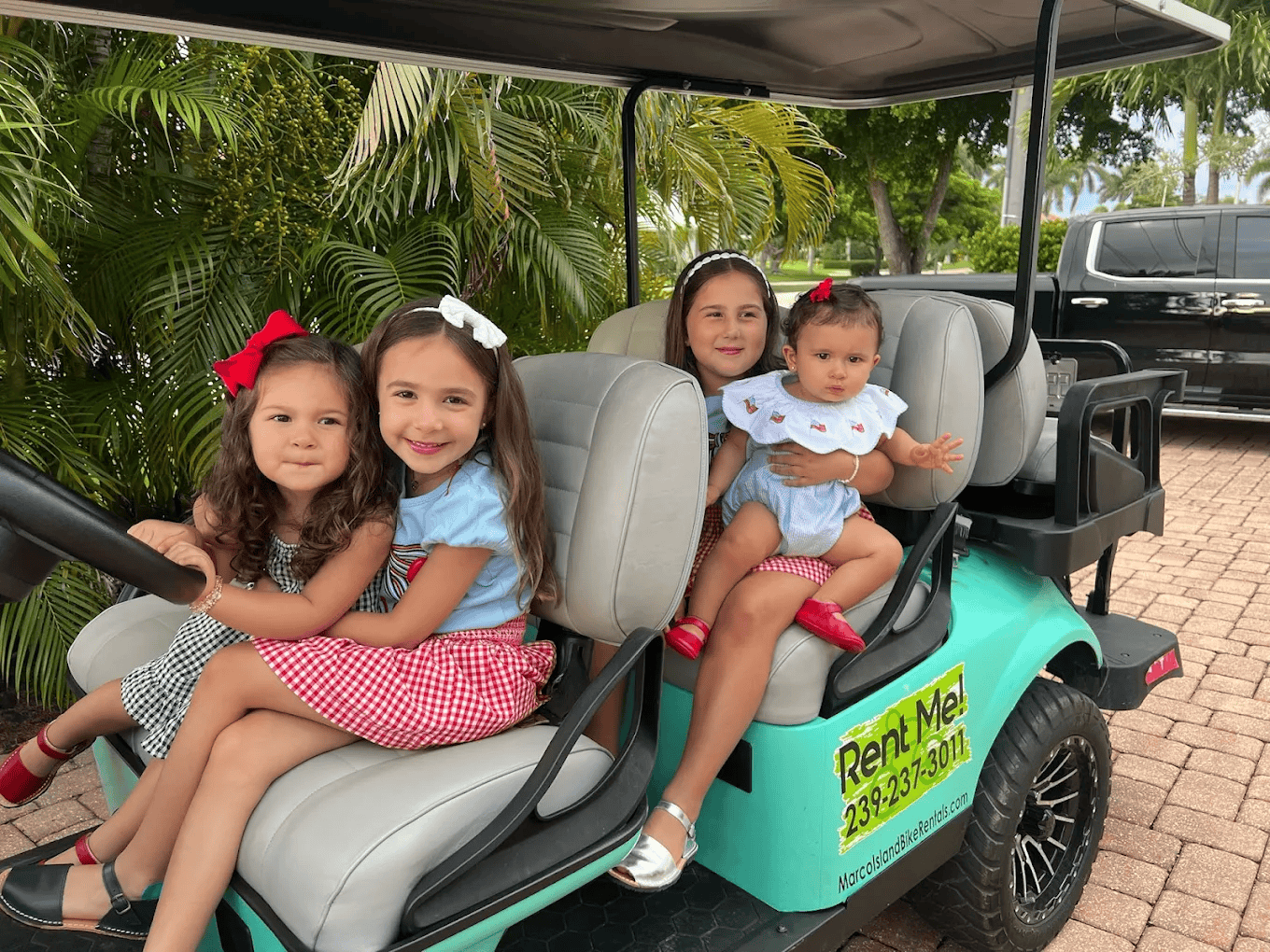
It might be tempting to pile everyone in for a short ride to the ice cream shop, but overcrowding is dangerous. Every passenger needs their own seat.
If the cart has four seats, you can only transport four people. Lap children are not safe in these open vehicles. If a child needs a car seat in a regular vehicle, they need a car seat in the golf cart.
Keep arms and legs inside the vehicle while it is moving. The open design feels freeing, but it offers less protection than a standard car door. Sharp turns or sudden stops can catch you off guard if you aren’t seated properly.
Navigate Traffic and Parking

Driving an LSV puts you in the mix with regular traffic. You’ll share the road with delivery trucks, SUVs, and other vacationers. Treat your cart exactly like a car.
Stop at all stop signs and use your turn signals well in advance. Yield to pedestrians at crosswalks. The rules of the road do not change just because your vehicle is smaller.
Parking is generally easier with a smaller vehicle, but you still need to park in designated spaces. You cannot park on sidewalks or in areas marked “No Parking.” In bustling areas like Pine Avenue, look for spots specifically marked for carts. They’re often closer to the shops and restaurants.
Night Driving Awareness
The fun doesn’t stop when the sun goes down, but the driving conditions change. Your LSV has headlights, but you’re still smaller and harder to see than a standard car.
Use extra caution at intersections. Double-check that oncoming traffic sees you before you turn. Stick to well-lit streets whenever possible.
Avoid dark, unfamiliar shortcuts at night. Staying on the main roads helps other drivers spot you. If your rental has interior lights, keep them off while driving, so they don’t impair your vision or distract other drivers.
Weather Trouble Tips
Florida weather is famous for its sudden shifts. A sunny morning can suddenly turn into a rainy afternoon. Most LSVs have a roof, but rarely have windows or doors.
If a storm starts to roll in, the best thing to do is pull over and wait for it to pass. Heavy rain can make it hard to see and create slick road conditions. Plus, the open sides of the cart mean you and your passengers will get soaked.
Lightning is another serious risk during Florida storms, and an open golf cart offers no protection. If you hear thunder, you should head for a sturdy, enclosed building. As a rule of thumb, wait at least 30 minutes after the last rumble of thunder before getting back on the road.
Respect the Community
Anna Maria Island is home to a year-round community. Being a thoughtful driver can make a big difference!
Try to keep noise levels down, especially late at night. Sure, those electric motors are quiet, but blasting music or loud conversations can still disturb the peaceful vibe.
If you notice traffic building up behind you, do everyone a favor and pull over when it’s safe. Since you’re cruising at a slower pace, letting cars pass will take the pressure off you and keep things moving smoothly for everyone. It’s a win-win!
What To Do in an Emergency
Despite your best efforts, things can happen. If you experience a mechanical issue, move the vehicle to a safe spot off the road and call your rental agency. They’re equipped to handle breakdowns and often bring you a replacement.
In case of an accident, call 911. Treat it like a car accident. Exchange information with the other driver and wait for law enforcement to arrive. Having the rental agency’s contact number saved in your phone is a smart move.
Enjoy the Ride
Once you master the basics, exploring AMI by cart is pure joy. You feel the breeze, smell the salt air, and see the island from a new perspective.
Take the scenic route. Drive slowly down Gulf Drive and admire the pastel-colored houses. Stop for a spontaneous photo op when the sunset paints the sky.
This mode of travel encourages you to slow down. It aligns your internal clock with island time. You notice the little details—the osprey nesting on a platform, the hibiscus blooming by a fence—that you might miss in a sealed-up car.
When you’re ready to Rent anna maria golf cart, we have you covered. Crabby Joe’s Adventures & Rentals offers a fleet of well-maintained vehicles perfect for families and couples alike. We make the process very simple!
Now that you’ve read this beginner’s guide to safely driving a golf cart, you’re ready to hit the road. Be safe, be courteous, and soak up every moment of your island getaway.